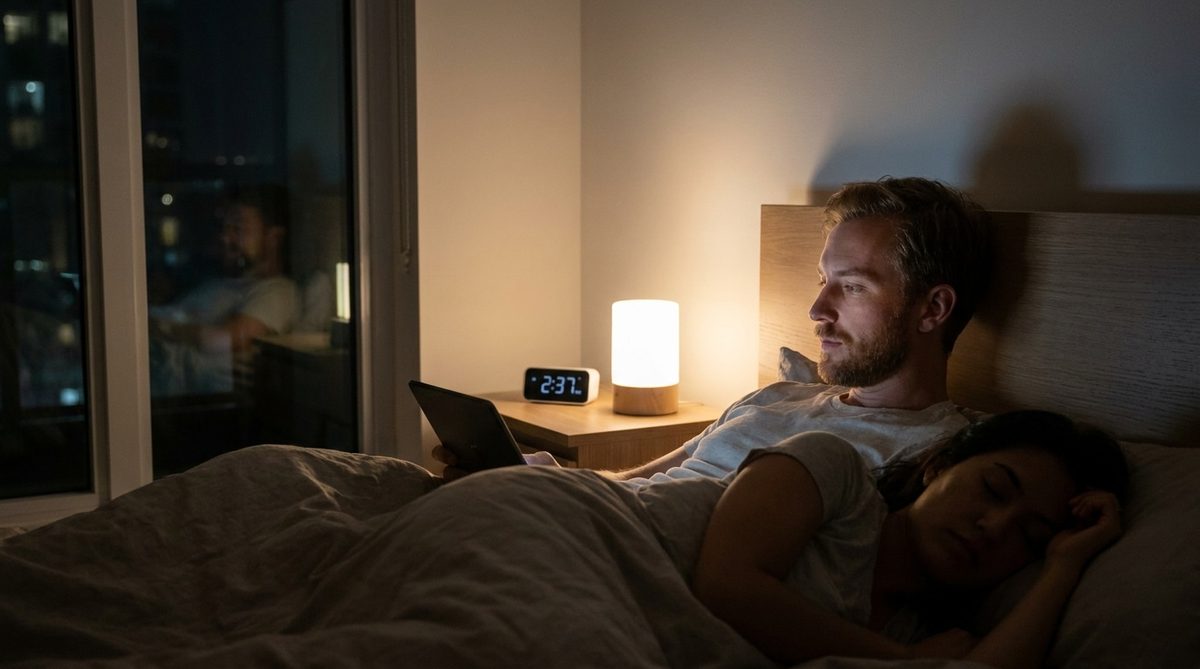
It’s 10 PM. One partner’s eyelids are already heavy, dragging down toward reality. The other is just heating up.
In the early months of a relationship, this late-night choreography is cute. It’s quirky. It’s a sign of different personalities. But when it happens every night for years, the smile fades. The mismatch leaves invisible scars.
Most people think the biggest cost is tiredness. They’re wrong.
The real damage isn’t physical exhaustion. It’s the slow erosion of connection. When night splits a home in two, it reveals fractures deeper than just needing sleep. We dive into those homes where the night divides instead of uniting.
The Silence of the Bedroom vs. The Buzz of the Living Room
A hallway can feel like a border between two parallel worlds.
On one side, the bedroom is dark. Breathing slows. The world shrinks to the rhythm of rest. On the other, the living room glows with blue light. A keyboard clacks. A TV murmurs in the background.
This difference in atmosphere creates a physical split inside the same house. The marital home loses its unity. It starts feeling like a shared apartment with staggered shifts. Moving from the bed to the couch feels like a silent relay race.
The Unexpected Loneliness of Early Nights
Bedtime is supposed to be the calm after the daily storm.
But slipping into bed alone can trigger a strange isolation. While one partner reads, works, or unwinds, the other faces an empty space. This temporary separation happens five to seven days a week. Those hours of solitude weigh heavily.
Paradoxically, the person staying up feels it too. They walk on eggshells. Every movement is calculated to avoid breaking the other’s sleep. The quiet isn’t peaceful; it’s tense.
This Marital Time-Zone That Eats Away at the Bubble
The Comforting Illusion of Evenings Under the Same Roof
It’s easy to believe everything is fine because you share a postal address.
You eat dinner together. You cross paths in the kitchen. You share a few minutes of chat. It gives a sense of closeness. But this simultaneous presence can be an illusion.
Sitting on the same couch while one partner is half-asleep and the other is mentally active isn’t truly sharing a moment. The bond stretches thin. It’s held up by habit and intellectual routine, not genuine emotional connection.
The Bitter Realization: Sharing a Bed, Not a Rhythm
The common mattress becomes the stage for a glaring mismatch.
Sliding under the covers at 2 AM, shivering, risks waking a partner who has been asleep for hours. This shared sleep loses its symbolic meaning. Bodies cross paths more than they connect. The marital bed reduces to its most austere function: a piece of furniture for rest.
Biological rhythm dictates the terms, sweeping away desires for shared warmth.
Larks and Owls: The Science Behind the Pillow War
What Genetics Reveal About Incompatible Chronotypes
Nature has done its job by rewarding metabolic diversity.
Some people are true early risers, bursting with energy at dawn. Others find their concentration peak in the middle of the night. Careful observation of internal biology shows these differences aren’t whims. They are physiological facts.
Fighting your internal clock to match your partner’s is a losing battle. It costs precious mental energy every day.
The Myth of the Synchronized Couple
Society maintains a smooth image of romance. The perfect couple does everything together. Joyful breakfasts. Simultaneous lights-out.
This pressure to synchronize totally weighs heavily on those who function differently. Breaking free from this dictate is essential for breathing room.
True love isn’t measured by bedtime. Dismantling this false obligation of fusion often relieves the crushing pressure.
The Erosion of Intimacy
The night mismatch doesn’t just affect sleep. It affects touch.
When rhythms are out of sync, spontaneous affection suffers. A hand on a shoulder, a lingering kiss, a shared laugh in bed—these moments require overlapping time. Without it, intimacy becomes scheduled. And scheduled intimacy rarely feels spontaneous.
The Communication Gap
How do you talk about a problem you don’t have energy to discuss?
If one partner is fresh at dawn and the other is dragging at noon, meaningful conversations get pushed to the margins. You’re either too tired or too busy catching up on rest. The daily check-in becomes a logistical task rather than an emotional exchange.
Small Shifts, Big Changes
You don’t need to change your biology. You need to change the rules of engagement.
1. Protect the Overlap
Identify the 30 minutes where both of you are awake and alert. It might be 7 AM for one and 6:30 AM for the other. It might be 8 PM and 8:30 PM. Guard this time. No phones. No chores. Just presence.
2. Redefine “Together”
Stop measuring connection by simultaneous activities. Separate hobbies are fine. Shared meals are valuable. But don’t force synchronization where it doesn’t exist.
3. The Bed Boundary
If the sleep mismatch is extreme, consider separating beds. It sounds radical. It’s not. It’s practical. Better to sleep well and be present during the day than to lie awake, resentful, in the same bed.
4. Morning or Evening Rituals
Create a ritual that happens at the start or end of the day, when both are available. A morning coffee. A post-dinner walk. Anchor your connection in the overlap.
The Open Ending
The night won’t always align. The lark and the owl may never sing the same song.
But the home can still be a sanctuary. Not because you move in perfect sync, but because you respect the rhythm that isn’t yours.
The question isn’t whether you can fix the mismatch. The question is whether you can live with it. Without resentment. Without loss.
Maybe the answer lies not in closing the gap, but in widening the bridge across it.
The hidden cost of losing late-night talks
It’s not just about the grogginess. The real damage happens when you stop talking. Those quiet minutes before you drift off are where couples usually share the soft stuff. The darkness makes people honest. When you’re not in bed together, that channel goes dead. You lose the daily ritual of connecting. The conversation shrinks to logistics. Who’s picking up the kids? Who’s paying the bill? The romance gets replaced by a to-do list.
Morning resentment builds fast
You wake up early. You’re ready to go. Your partner is still a zombie until noon on weekends. It’s frustrating. Small things become big problems. A slammed door. A coffee maker that’s too loud. Light turned on too soon. These aren’t just annoyances. They are sparks of anger.
The initial patience wears off. You feel misunderstood. They feel rushed. Both sides think the other person’s natural rhythm is an attack on them. It’s a low-grade irritation that festers all day.
Accept the mismatch to save the relationship
Stop trying to force your body to sleep at 10 PM if it’s not wired for it. Pressing a stone for water doesn’t work. Fighting your biology just creates conflict. Accept that you might be going to bed at different times.
This isn’t giving up. It’s strategizing. The bedtime kiss still matters. It just doesn’t have to mean you’re staying awake together. Give that gesture its weight back. Don’t see it as them abandoning you. See it as them honoring their own rest.
Build connection outside the bedroom
If night divides you, use the day to bring you together. You have to get creative with timing. Find moments when your energy levels actually match.
- Morning coffee: Share a slow start before the world wakes up.
- Lunch calls: A warm voice on a break can bridge the gap.
- Sunday walks: Long, unhurried strolls when you’re both alert.
Anchor your intimacy in these windows. Don’t force it into the hours when you’re both exhausted or fighting your circadian rhythms.
Spring is coming. The days are getting longer. Use this season to rethink how you operate as a pair. A strong relationship isn’t measured by how often you fall asleep together. It’s measured by how you show up when you’re awake.
Stop fighting the clock. Cultivate the moments you both have the energy to be present. The spark comes from being there, not just being in bed.
Are you willing to write new rules that don’t revolve around midnight?