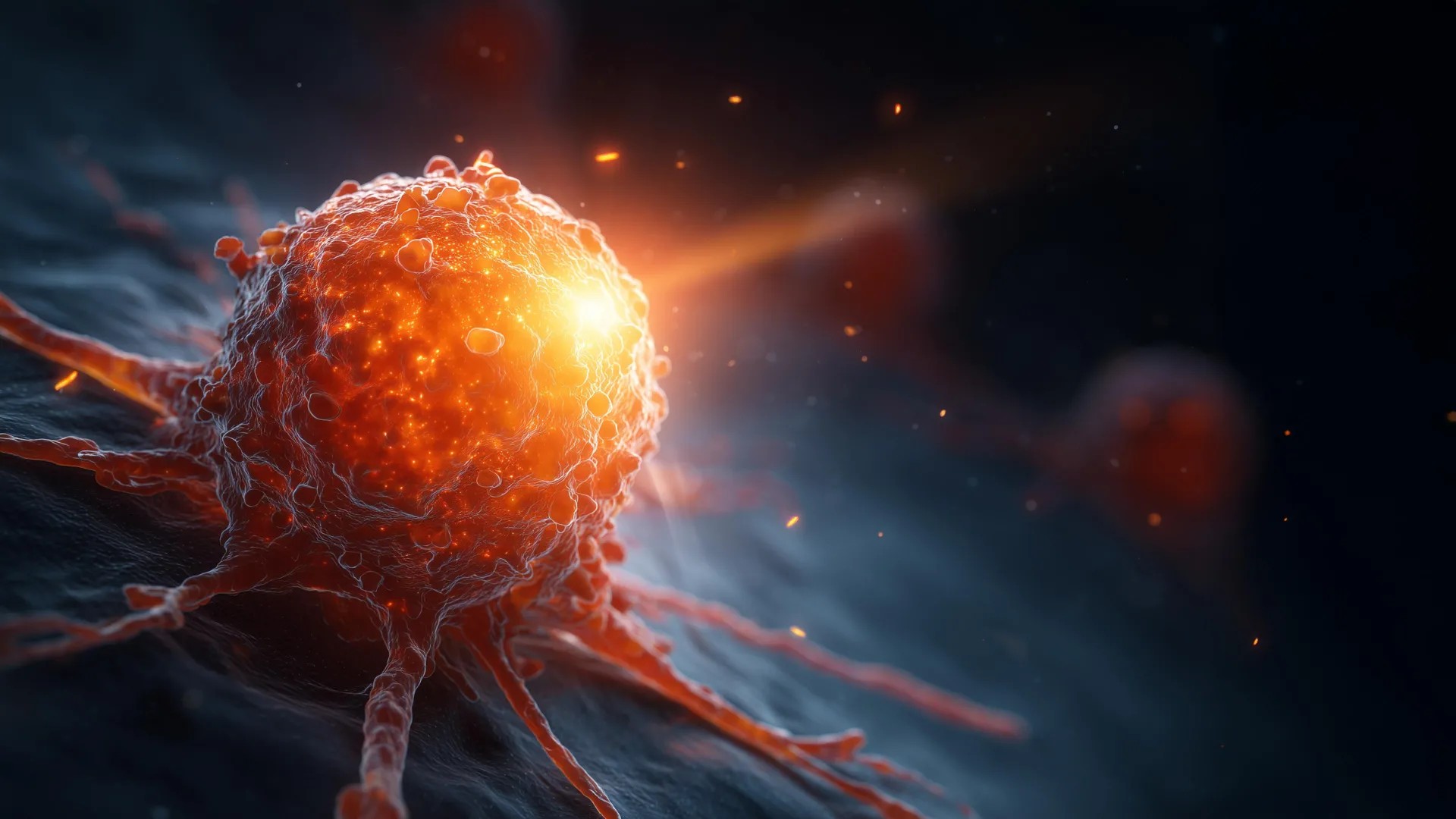
Cancer plays it smart sometimes. In lung tumors especially, the cells don’t always run wild. They hit pause.
Stress hormones float around inside us. Glucocorticoid receptors—those specialized proteins hanging out in tumor cells—pick up on that stress signal. They trigger a dormant state. Cell division slows down drastically.
Therapy stops working. The drugs bounce right off a wall the cancer built with its own biology.
Scientists want to smash that wall. They need to wake these sleeping cells up, make them vulnerable, and then kill them. The problem? You can’t just delete those receptors. They are everywhere. They control inflammation. They support your immune system.
Nuke them body-wide and the patient dies.
You need a scalpel, not a bomb.
Researchers at ETH Zurich built one. Well, they built a molecular version. It’s a light-activated switch.
Engineering A Molecular Tag
Cells have a recycling center. It’s efficient. Brutal even.
When proteins go bad, the cell attaches a little tag. “Dispose of this.” The protein gets shredded and removed.
The ETH team hijacked this system. They wanted the cell to shred its own glucocorticoid receptors, but only in the tumor. And only when told.
They designed a three-part machine.
One piece grabs the receptor.
Another grabs the enzyme that does the tagging.
A flexible connector links them.
In the dark, or under normal light, that connector stays straight. It pulls the enzyme close enough to slap the disposal tag onto the receptor. The cell breaks it down. Dormancy ends. Cancer wakes up.
Hit it with the wrong specific wavelength? The connector bends. It folds up like a broken origami crane.
The enzyme and receptor drift apart. No tag. No destruction. The receptors survive in healthy tissue because the switch turns off there.
Robin Scheuplein, a doctoral student involved in the work, called it realistic. Existing medical tech can actually support this kind of localized therapy. It isn’t sci-fi yet, it’s lab-scifi that might actually work.
“The effect is reversible and can be controlled precisely.”
Testing The Theory
Did it work? In dishes of lung cancer cells? Yes.
The receptors vanished quickly. The cells, previously hiding in their dormant shell, stirred. Gene activity analyses confirmed it. They were no longer playing dead.
Now they are sitting ducks for chemotherapy or radiation.
But this is the bench, not the bedside. Living organisms are messier. Harder.
The light problem is real. Light doesn’t travel far into human tissue. Millimeters. Just millimeters.
If you want to save the tissue surrounding the tumor, you need the light to be right there at the edge of the tumor core. For lung cancer? Maybe an endoscope works. You snake the light inside. You shine it where it hurts most.
Deep body tumors? Harder. The team is working on switches triggered by near-infrared light. It penetrates deeper. Gentler too.
More Than Just Lung
Why stop at lung?
The system is modular. That’s the key word. Swap the connector. Keep the mechanism.
Breast cancer? It often depends on estrogen receptors. Prostate cancer? Androgen receptors. This switch could probably target those too. Turn them off selectively.
We’re talking about a tool that lets scientists pull specific levers in the cancer signaling pathway and watch what happens. It’s precision medicine in a test tube right now.
Patients might wait. Light penetration limits. Safety hurdles. All standard stuff. But the concept? It’s elegant. You don’t fight the biology. You outmaneuver it with a bent connector and a focused beam.
What else can we bend before it bends us?