Squash. Tomatoes. Heat. That is the recipe right now.
Most of us can buy cherry tomatoes in February, sure. The grocery lights are on, the bins are full, the prices are static. But does that mean they taste good? Hardly. The thrill of early summer produce gets diluted when the harvest is endless. I remain stubbornly convinced, however. Real peak-season squash and tomatoes hold more water, more sugar, more life. It is a difference you cannot fake with imported greenhouse veggies.
So we bake spaghetti with them. Not just any baked spaghetti, either. This is the dish that claims lasagna territory but skips the layering nightmare. You still get the crispy edges, the cheesy pull, the saucy chaos. You just don’t get the hours spent constructing towers of noodles in a Pyrex dish.
“The white sauce was creamy without feeling too heavy.” —Jan, Recipe Tester
Why bother? Because you have an abundance of vegetables. Because you want dinner in an hour, tops. Because a bowl of creamy pasta with bright green and red vegetables feels like summer, not survival.
What actually goes in
You need specific ingredients for this to work. Substitutions here break the texture or the flavor balance.
The Pasta
Use 1 pound of dried spaghetti. Forget angel hair, it turns to mush. Cook it for one minute less than the box says. It will finish cooking in the oven. This keeps the strands distinct, al dante, and resistant to becoming a glob.
The Vegetables
One pound of zucchini or yellow squash. Medium ones work best. If your local grower handed you baseballs of yellow squash, quarter them lengthwise first. Then slice into half-moons.
One medium yellow onion, diced.
A pint of cherry or grape tomatoes, halved. Keep them whole enough so they hold shape but cut them so they burst.
The Sauce Base
Here is the twist. No heavy cream. No half-and-half. Just four cups of milk. Whole milk or 2%. We tested both. The result is a light Parmesan-cream sauce. Heavy cream masks the vegetable flavors. Milk lets the zucchini and tomato shine through while providing just enough richness. It does not feel like a负担.
The Cheese
Three ounces of finely grated Parmesan, whisked into the milk sauce. Do not buy the pre-shredded stuff in the plastic bag. The anti-caking agents make the sauce gritty. Grate it yourself from a block, or hit up the deli.
Then, for the top, shred three ounces of low-moisture mozzarella. You need that melt. That stretch. The kind that requires a napkin before you even take the first bite.
The method
It is fast. Really fast.
Preheat the oven to 375 degrees F.
Step 1: The Veg
While your pasta water comes to a roaring boil, grab a 12-inch pan. Heat 2 tablespoons of olive oil until it shimmers. Throw in the squash, onion, half a teaspoon of kosher salt, and three-quarters of a teaspoon of dried Italian seasoning.
Stir. Wait. Four to five minutes.
The squash should soften and just start to brown at the edges. Not cooked to death. Still crunchy enough to matter.
Add three minced cloves of garlic. Stir for thirty seconds until your kitchen smells like a Roman bistro.
Move this mixture to a bowl. Do not clean the pan. Leave the good stuff in there.
Step 2: The Roux and Sauce
Add the remaining 2 tablespoons of olive oil to the hot pan.
Sprinkle in three tablespoons of all-purpose flour. Stir constantly for one minute. This cooks the raw flour taste out.
Whisk in the four cups of milk, slowly. It will look lumpy. Do not panic. Whisk it. Bring it to a boil, then drop to a simmer. Keep whisking until it thickens enough to coat the back of a spoon. About five minutes.
Whisk in the grated Parmesan. Add three-quarters teaspoon kosher salt and a quarter teaspoon black pepper. Stir until the cheese melts completely. It should be glossy. Smooth.
Step 3: The Mix
Your pasta is ready. Drain it. Dump it back into the big pot. Pour in the sauce. Toss everything until the spaghetti is fully coated.
Stir in the vegetable mixture. Add the halved cherry tomatoes.
Taste a noodle. Needs salt? Add a pinch. Needs pepper? Add more.
Dump it all into a 9×13 inch baking dish. Smooth the top.
Sprinkle the shredded mozzarella evenly over the surface. Do not pack it down. Let it breathe.
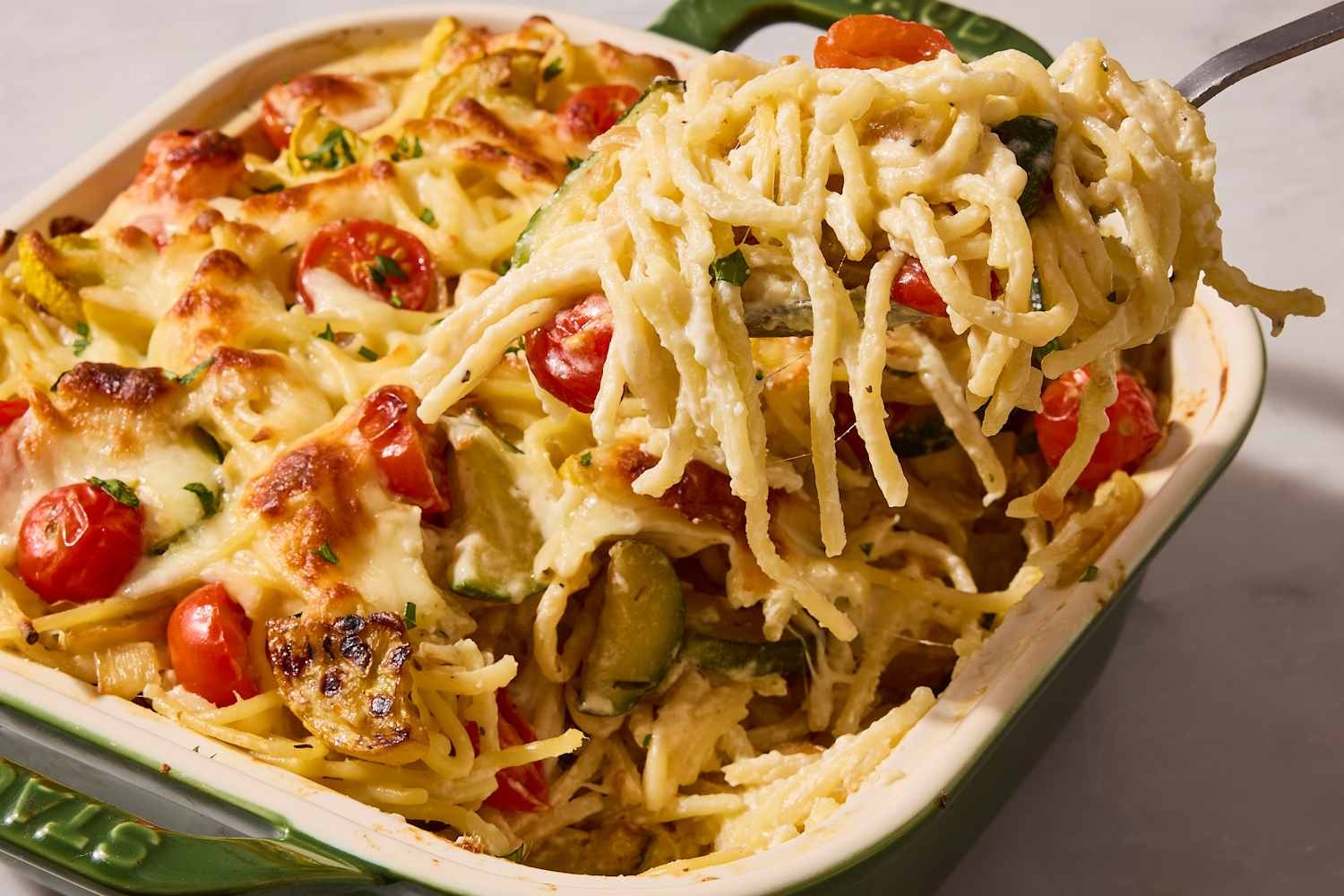
Bake for 15 to 20 minutes, or until the cheese is bubbly and spotted with brown.
Garnish with fresh parsley if you are feeling fancy. Serve like a lasagna, cutting straight into the casserole dish.
Practicalities
Nutrition-wise, each serving runs about 520 calories, 63g of carbs, and 23g of protein. It is vegetarian, pescatarian-friendly, and free from shellfish, nuts, soy, and alcohol. A decent amount of sodium, sure (almost 700mg), but it is a balanced meal if you count it as one.
Can you make this ahead? Yes. Assemble the dish, cover it tight with foil, and stick it in the fridge for up to two days. Or freeze it for three months.
If freezing, thaw it in the fridge overnight before baking. Bake covered at 350 degrees F for twenty minutes until heated through. Remove the foil and bake another 15-20 minutes until golden.
Leftovers keep for four days in the fridge. They will dry out. The cream sauce tightens up in the cold. Reheat gently, maybe adding a splash of milk to loosen it back up.
The vegetables stay tender. The cheese stays stretchy. The flavors, however, never really get that deep. They do not need time to meld because the point is brightness, not complexity. It is a summer dish. Light, bright, quick.
Is it as good as a slow-cooked ragu? Probably not.
Does it matter? Not really. You have zucchini to eat. You have tomatoes that actually taste like something. The sun is outside. Just cook it.
The texture changes slightly, the moisture shifts, but the spirit of the meal remains intact. A bowl of comfort, dressed for warmer weather.
Sometimes you just want the cheese pull without the three hours of prep. This gives you exactly that. The sauce holds the pasta, the veggies provide the crunch, the mozzarella does its job. Nothing else required.
Eat it while the kitchen is still hot. Let the oven door hang open a bit. Listen to the buzz of flies against the screen.