The Seasonal Appeal of Fava Beans
Spring markets are defined by the arrival of fava beans, presented in puffy, bright green pods stacked high in crates. While preparing them requires a bit more effort than many other vegetables, the result is a rewarding culinary experience. The process involves two main steps: first, removing the beans from their pods, and second, slipping off the skins after a quick boil.
This preparation is less of a chore and more of a social kitchen activity. The beans pop out of their pods quickly, and peeling the skins is a task that can easily be shared while chatting. However, the true luxury of this dish lies in having the beans prepped and ready to go, allowing for a swift and elegant assembly of flavors.
A Fresh and Versatile Recipe
This recipe transforms simple, shelled fava beans into a vibrant dish using fresh herbs, citrus, and nuts. It is designed to be flexible, allowing home cooks to adapt ingredients based on what is available in the pantry.
Key Ingredients and Substitutions:
* Fava Beans: Look for medium-to-large beans. Avoid beans that are too small (which may have tough skins) or too large (which can become starchy and hard). There is a “sweet spot” in size that offers the best texture.
* Herbs: Fresh mint is the primary herb, but basil or dill work as excellent alternatives.
* Nuts: Pistachios provide crunch and color, but toasted almonds are a suitable substitute.
* Cheese: Parmesan is used for saltiness and depth, but Pecorino or crème fraîche can also be used.
* Citrus: Lemon juice adds brightness to balance the earthiness of the beans.
Preparation Insight:
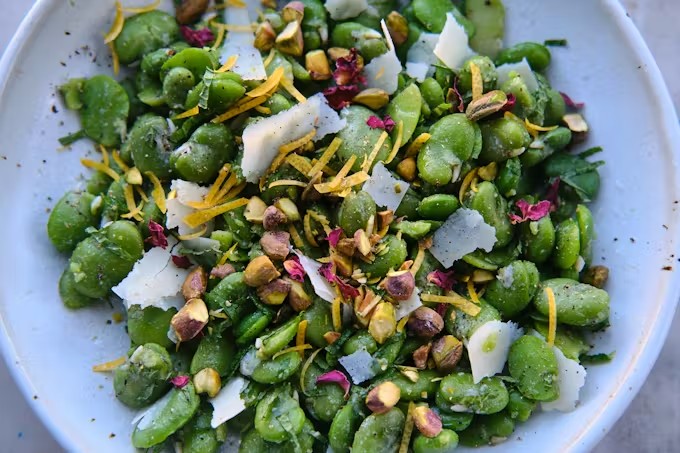
The dish comes together quickly once the beans are prepped. Toss the shelled favas with lemon juice, minced mint, crushed pistachios, and grated cheese. For a garnish, dried rose petals can add a touch of elegance and aroma, though they are optional.
Serving Suggestions
While this dish serves as a beautiful side, it can easily be elevated to a main course or incorporated into other meals.
- Bruschetta: Spread a thick layer of ricotta or goat cheese on toasted bread and top with the fava bean mixture.
- Pizza Topping: Use pizza dough topped with ricotta, goat cheese, or mozzarella. After baking, scatter the fresh fava bean mixture over the hot pizza for a fresh, contrasting texture.
- Edamame Alternative: For a quicker version that skips the shelling process, edamame can be used as a substitute, though the flavor profile will differ slightly.
Why This Matters
Fava beans are a seasonal treasure that encourages mindful cooking and ingredient appreciation. By mastering the preparation of this vegetable, home cooks can unlock a variety of fresh, vegetarian meals that highlight the simplicity of whole foods. The ability to swap ingredients like nuts and herbs makes this dish accessible year-round, depending on what is in season or on hand.
Conclusion: This fava bean dish is a testament to the beauty of seasonal cooking, offering a simple yet sophisticated way to enjoy spring’s freshest produce with minimal effort and maximum flavor.