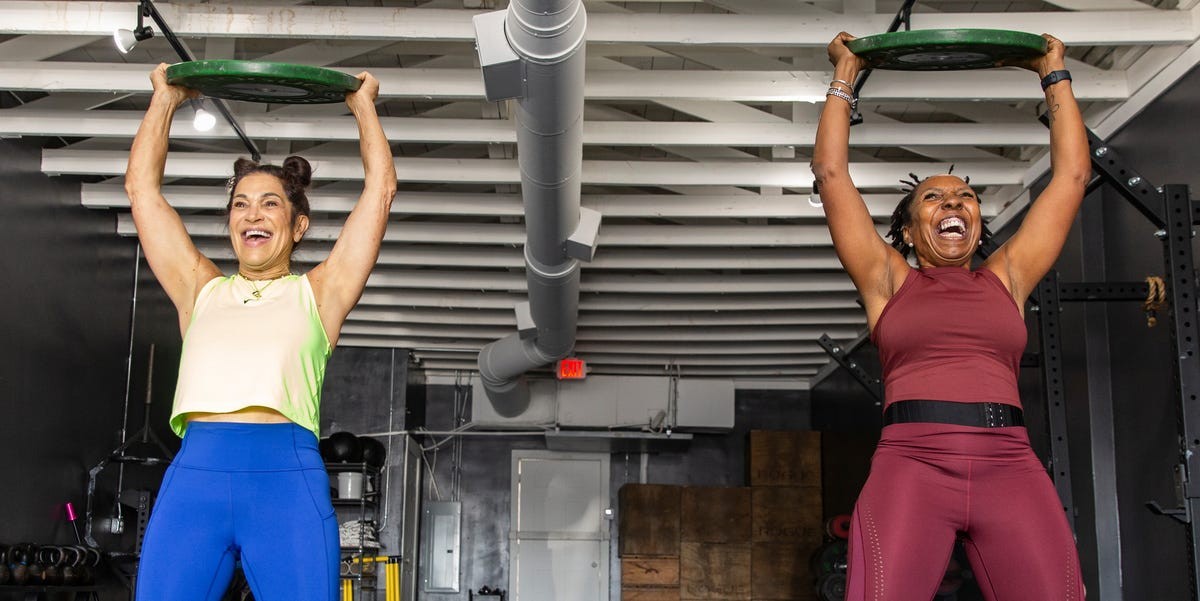
For decades, societal expectations have dictated how women “should” age—small movements, gentle exercise, and a quiet retreat from physical power. However, a growing movement is shattering that mold: women over 60 are embracing heavy weightlifting, not just to reverse the effects of aging but to redefine what aging itself means. Backed by rigorous research, these women are building stronger bones, more muscle, and an unshakeable sense of self-worth at every stage of life.
The Science Behind Strength
The benefits of lifting heavy extend far beyond aesthetics. The LIFTMOR study demonstrated that postmenopausal women engaging in high-intensity resistance training twice a week for eight months saw an average 2.9% increase in bone density in their lower spines – while the control group lost 1.2%. This isn’t just about preventing osteoporosis; it’s about reclaiming physical dominance. The key is intensity: lifting 80-85% of your one-rep max (the heaviest weight you can lift once) is not only safe but demonstrably effective.
As women age, hormonal shifts and muscle fiber loss accelerate after 50. Orthopedic surgeon Vonda Wright, MD, explains that these changes make older bodies more vulnerable to injury and instability. But strength training counters this decline, rebuilding lost muscle fibers and restoring confidence in movement.
Beyond the Gym: Connection and Resilience
The impact extends beyond the physical. Isolation increases mortality risk by up to 32%, while strong social connections can slash dementia risk by over 25%. For many women, lifting weights becomes a bridge to community, fostering shared encouragement and mutual support. The CDC now recommends heavy resistance training twice weekly for older adults, signaling a paradigm shift in how we approach aging.
Real Women, Real Results: Stories of Transformation
Joni Day, 61, faced an osteoporosis diagnosis and a doctor’s prescription for long-term medication. Instead, she joined a barbell club, lifting heavier than she ever imagined. Within a year, her bone density improved dramatically, and she no longer needed medication. “Strength training makes me feel like I don’t have to just get old and lose my balance,” she says.
Ann Nassoura, 65, was labeled “fragile” by her own daughter. That label ignited a relentless pursuit of strength. After years of yoga, she found true resilience in the weight room, pushing past limitations and reclaiming her physical independence.
Peggo Horstmann Hodes, 70, suffered debilitating back spasms. Two years of strength training later, she’s lifting more than ever, defying expectations and proving that age is not a barrier to power. These women aren’t just lifting weights; they’re dismantling stereotypes.
The Power of Community
Heather Jackson, 57, recalls a lifetime of being told to be smaller, weaker. After injuries from martial arts, she realized she needed more than just endurance; she needed strength. Now deadlifting over 200 pounds, she embodies a generational shift. “Our bodies are meant to carry us through life, not just look pretty,” she says.
At Harlem Kettlebell Club (HKC), women are finding not just strength but solidarity. Florence Lynch, 68, started lifting at 57 and has since completed three marathons. She credits the gym with giving her confidence and purpose. Cynthia Sanders, 66, was humbled by a simple push-press but turned that frustration into a relentless pursuit of strength, competing in Hyrox events and inspiring her friend Becky Hennesey, 67, to join her. Together, they challenge each other, pushing boundaries and rewriting the narrative of aging.
Living Strong at Any Age
Geraldine “Jerry” Leo, a centenarian, proves that strength has no expiration date. At 100, she planks for four minutes, lifts weights, and runs 5Ks. Her advice? Keep moving, embrace variety, and never underestimate the power of a post-exercise high.
Ultimately, these women demonstrate that strength isn’t just about lifting heavy; it’s about living fully. It’s about rejecting fragility, embracing resilience, and redefining what it means to grow older with power and grace.
The message is clear: aging doesn’t mean decline; it means adaptation, growth, and the relentless pursuit of strength at every stage of life.