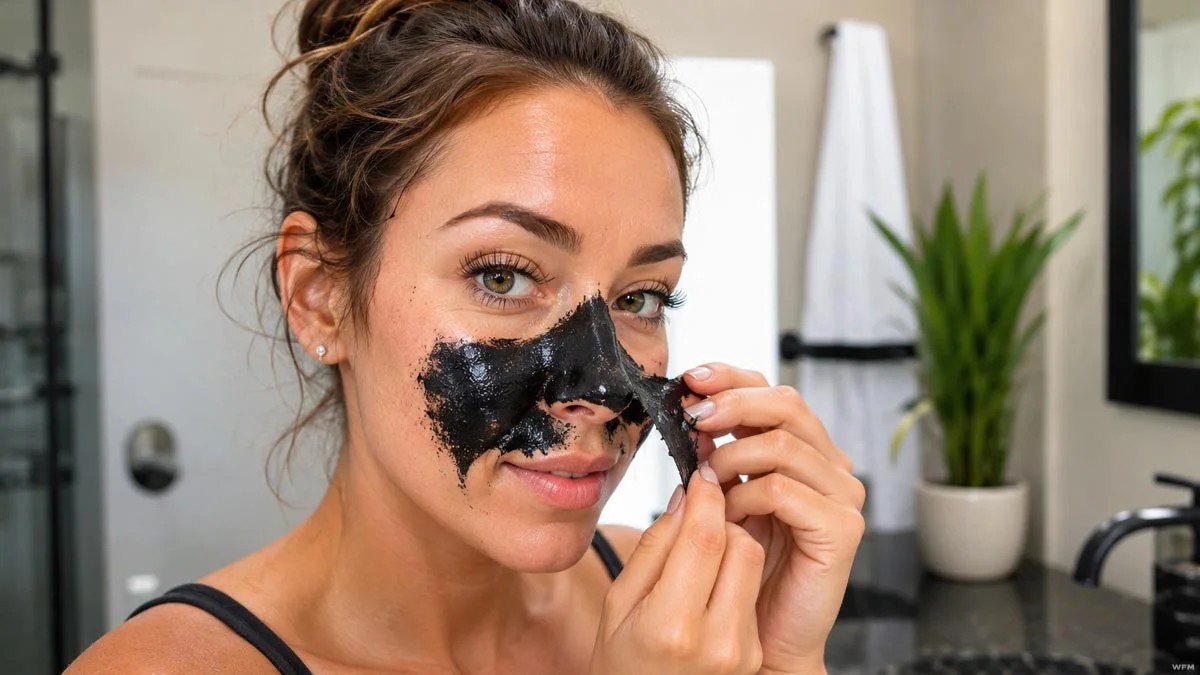
You know the video. Jet-black rubber film peeling away from a face. It reveals a landscape of tiny, glistening bumps. It looks satisfying. It looks effective. It is a lie.
At least, mostly.
The internet sells you a dream of deep pore cleansing with one dramatic tear. The reality is far less cinematic. These peel-off masks do not remove true blackheads. They remove other stuff. Mostly fine hairs and surface oil. But we keep buying them. Why? Because the visual promise is too strong to ignore.
The Charcoal Myth
Activated charcoal gets its color from extreme heat. Bamboo or wood turns into porous carbon. This structure is brilliant at trapping molecules in a lab setting. It adsorbs toxins. It soaks up oil. Theoretically.
But your face isn’t a petri dish.
A 2024 review in the International Journal of Community Health made this clear: there is no solid clinical evidence that charcoal removes acne or blackheads. The claims are anecdotal. The EWG rates it as safe, yes, but safety isn’t efficacy. Just because it doesn’t burn your skin off doesn’t mean it’s fixing anything.
What Are You Actually Peeling Off?
When that mask comes off, you see white or grey filaments. You assume these are the oxidized clogs. The blackheads you hated yesterday.
They are not.
Those are sebaceous filaments. They are natural oil channels. You also pulled out vellus hairs—those baby hairs that serve no purpose except to look gross when stuck to black glue. True blackheads sit deep in the follicle. They are hard plugs of sebum and dead cells. A peel-off mask touches the surface. It does not reach depth.
One tester compared the sensation to peeling dried superglie off their eyelids. Zero blackhead removal. Three tries later, the verdict stood.
“If you’re expecting a physical ‘yank,’ the evidence simply isn’t there.”
Dermatologists agree. Cleveland Clinic notes that blackheads need ingredients that penetrate. Peel-off masks just stick. The American Academy of Dermatology says these masks cannot replace medical treatment. They are, at best, a cosmetic complement. A distraction, really.
The Cost of the Peel
Let’s talk damage.
The mask adheres to everything. Not just the oil. It grips your stratum corneum. The outermost protective layer. When you rip it off, you take pieces of that barrier with you.
This causes micro-tears. Redness. Inflammation. Sometimes broken capillaries, especially on the nose. The skin stings for days. It feels raw. Exposed.
For sensitive skin, rosacea sufferers, or those with active acne, this is dangerous territory. You risk infection. Scarring. Health.com warns of excessive peeling. It is not a fun side effect.
Regulatory loopholes make it worse. Some brands hide alcohol or fragrances behind “charcoal.” They irritate. They inflame. Apply it to sunburned or dry skin, and you compound the injury.
The Better Way Out
You do not need trauma to clear pores. Chemistry works better than force.
Dermatologists love three ingredients.
- Salicylic Acid (2%): Oil-soluble. It dives into the pore. It dissolves the plug. A 2024 trial showed 88% clearance in 12 weeks. It works while you sleep. No ripping involved.
- Adapalene (0.1%): A retinoid. It speeds up cell turnover. It prevents new clogs before they start. The AAD recommends it for comedonal acne. It takes weeks to build. But it stays fixed.
- Azelaic Acid (10–20%): Gentle. Anti-inflammatory. Great for sensitive skin that can’t handle stronger acids.
Clay masks? Yes, but mixed with the above. Kaolin or bentonite clay absorbs surface oil without the violent stripping of charcoal peels. Rinse-off. Washable. No rubber mask to tear off.
The Rule: Never over-exfoliate. Your skin will panic. It produces more oil to compensate. Then you have worse blackheads. A vicious cycle. Always wear sunscreen. Exfoliated skin burns faster. SPF 30 is the baseline.
Repair Matters
Cleaning the pores is only half the battle. Recovery is the other.
After exfoliation, your barrier is compromised. You need to rebuild it. Enter PDRN.
Polydeoxyribonucleotides are DNA fragments. Highly purified, they mimic human signals. They tell your skin to heal. To produce collagen. To seal the barrier.
Douce Aura uses high-purity PDRN (98% similarity to human DNA) in their overnight mask. It is not an occlusive balm. It does not just sit on top. It works with cells.
The data backs this up. Clinical tests on 33 women showed:
– +52.69% boost in radiance
– +45.86 surge in hydration
– -20.69 reduction in wrinkle depth
All after just 15 to 14 days. It soothes the sting after acid treatments. It restores balance.
So, Do They Work?
Let’s return to the title question. Do black face masks remove blackheads
No. They pull out hairs. They scrape surface oil. They hurt your barrier. The satisfying tear on TikTok is a marketing trick, not a medical cure.
If you want clear pores, skip the charcoal rubber. Use salicylic acid. Be patient. Wait six weeks for real change. And repair the barrier at night with something intelligent like PDRN.
It’s boring. It’s slow. But your skin won’t pay for the hype. It’ll pay for the care you give it instead.
The question is not what you peel off. It’s what you leave behind.
Quick FAQs
-
Do black masks actually work?
Not on true blackheads. They lift sebaceous filaments and vellus hairs. Nothing more. -
What actually removes blackheads?
Salicylic acid and retinoids. They dissolve the clog from the inside. Chemical over physical. -
Are they safe?
Not for everyone. High risk of irritation, broken capillaries, and barrier damage. Avoid if you have rosacea or eczema. -
Clay vs. Charcoal?
Clay is clinically proven for oil absorption. Charcoal lacks peer-reviewed support for blackhead removal. Choose clay + salicylic acid over charcoal alone.