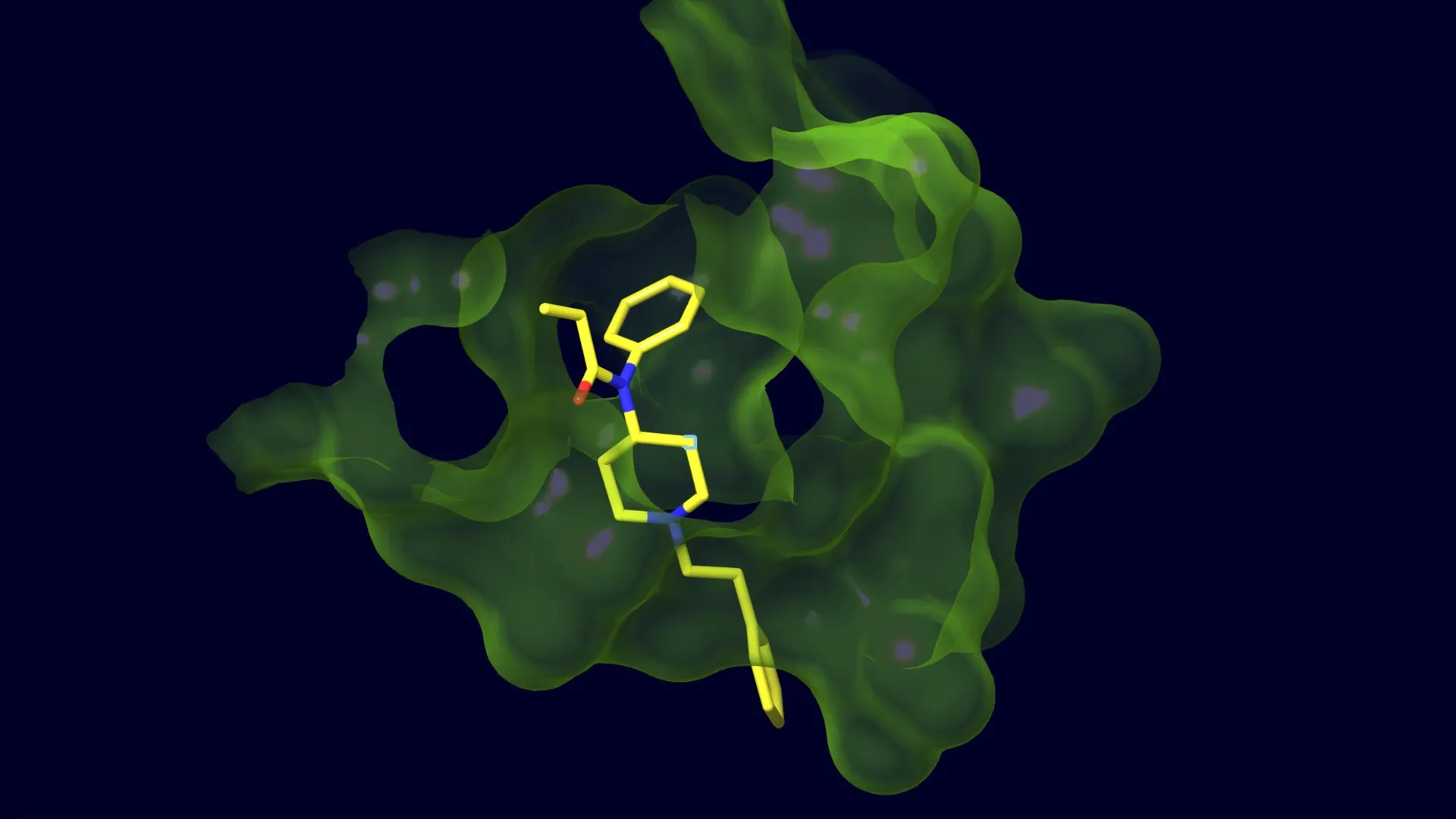
Waiting for an overdose to happen is a losing game.
We keep treating the crisis after the damage is done.
Scripps Research scientists decided to flip the script.
Instead of scrambling to revive someone whose breathing has stopped, they built an experimental vaccine. The goal is simple yet radical: stop fentanyl from ever reaching the brain.
The data came out in the Journal of Medicinal Chemistry. It suggests the vaccine doesn’t just target pure fentanyl. It covers the sprawling landscape of “designer drugs”—those modified, often more potent versions crafted specifically to slip past regulators and detection methods.
“By training the immune system to recognize an entire class, we stop playing catch-up with traffickers who constantly shift their recipes.” — Kim Janda, Senior Author
A New Strategy
For years, vaccine researchers tried a brute-force method. They’d use the actual drug, or a very close mimic, to teach the body to fight back. It’s like trying to catch a thief by memorizing the face of every single robber.
Except there are thousands. And they change looks daily.
This traditional approach has two fatal flaws. First, dealing with the real drug in a lab is a bureaucratic nightmare due to strict regulations. Second, the immune system is picky. If the vaccine targets Drug A, it might completely ignore Drug A1.
Janda’s team looked at this rigid logic and rejected it.
Why target one shape when the enemy changes its uniform every week?
The Unconventional Core
So they built a decoy.
A molecule that shares some features with fentanyl but has a totally different backbone. It’s structurally unrelated in key areas, which goes against everything conventional wisdom dictates about drug vaccines.
Arran Stewart, the lead researcher on the project, admits it was a shot in the dark. “Honestly? We didn’t know if this would work,” he said. The prevailing theory demands that your vaccine look exactly like the enemy. They went in the opposite direction.
They attached this new molecule to a protein carrier and vaccinated mice over eight weeks.
Broad Spectrum Defense
The results were unexpected.
Instead of creating a narrow defense against a single compound, the mice’s bodies produced antibodies that hunted a signature —a common trait found across many fentanyl variants.
The vaccine recognized fentanyl itself.
It recognized carfentanil (which is lethal in micro-doses).
It recognized China White, acetylfentanil, furanylfentanil.
Did it interfere with legitimate pain management meds?
No. It ignored morphine, oxycodine, remifentanil, and alfentanil completely. This selectivity is critical for safety.
When given fentanyl doses severe enough to normally shut down breathing in a mouse, the vaccinated subjects kept breathing. Almost normally. Their brain fentanyl levels were 70% lower than the control group.
The vaccine acted like a filter, keeping the toxin in the blood where antibodies can handle it, before it crosses into the brain tissue.
What Comes Next?
Mice aren’t humans.
This still needs to go through the grueling gauntlet of human clinical trials to prove safety and efficacy. But Janda sees a path forward for high-risk individuals, perhaps those in recovery programs facing potential accidental exposure.
“We can design vaccines for entire drug classes, not just single molecules. The public health impact here could be huge.”
The study, titled “Redefining Drug ImmuneRecognition,” was funded by the Shadek Family Foundation and led by Janda, Stewart, Eubanks, Zhou, and Steinhardt.
It’s not a cure. It’s not magic. But for a problem defined by how fast it moves, a strategy that stays one step ahead is better than standing still.
Will we actually deploy this before the next variant emerges? That remains to be seen. The market always moves fast. But maybe now, so do we. 🧬